



Make Room to Grow: Preparing Your Houseplants for Spring
Winter asks patience of both gardener and plant. Light fades, watering slows, radiators hum — and houseplants quietly retreat into a period of rest.
But February and early March are also moments of promise. New growth sits just beneath the surface as roots begin to stir. With a little considered care now, you give your plants the best possible start when spring light finally returns.
Here’s how to guide them gently through winter — and prepare for the season ahead.

Low-light living: Helping plants through darker days
One of the most common questions at this time of year is how to care for houseplants over winter. As days remain short and with radiators warming rooms, even well-placed plants can begin to struggle. That bright windowsill that carried them through summer suddenly feels dim and stuffy, leaves lose their depth of colour and stems reach awkwardly toward the glass, creating a lopsided silhouette that wasn’t there in autumn.
The overall impression is not dramatic decline — just a subtle loss of vitality, a sense that the plant is waiting rather than thriving. These signs are simply the plant responding to a season of lower energy.
Light governs everything from leaf size to root activity. With less of it available during the shorter days, houseplants conserve resources, redirecting energy below the soil rather than producing fresh foliage above. Recognising these signals early — before yellowing or stress sets in — is what allows winter care to remain gentle and preventative, rather than corrective.
Thoughtful tweaks for the darker months:
-
Move plants closer to windows or brighter corners, but away from direct heat such as radiators and log burners — even shifting them a metre can make a difference
-
Rotate pots weekly so growth stays balanced
-
Wipe dust from leaves so light can be fully absorbed
-
Group plants together to create a softer micro-climate, allowing humidity to build gently around their leaves while shielding them from draughts and dry heat
Avoid the temptation to introduce intense artificial light unless necessary; most houseplants simply want a period of rest with steadier, gentler exposure until spring strengthens.
Water less, let plants rest
Reduced light means reduced growth — and that means reduced water uptake. Compost that dried quickly in summer can stay damp for days in winter, cool to the touch long after the watering can has been put away.
A leaf yellows overnight. A stem feels softer than it should. Tiny flies hover near the soil. The familiar question surfaces: what is wrong with my houseplant? More often than not, it isn’t disease or neglect but signs of overwatering.
With less energy coming in through the leaves, roots simply aren’t drinking as quickly. Moisture lingers below the surface, starving them of air and slowly undoing the plant’s winter resilience. What looks like thirst is usually the opposite.
Winter watering tips:
-
Let the top few centimetres of compost dry before watering again
-
Always empty saucers after ten minutes
-
Water in the morning so excess moisture can evaporate during the day
-
Use room-temperature water to avoid shocking roots
- If using dehumidifiers, room air can become drier than we realise, leaving leaf edges crisp before compost ever dries
Think of winter as maintenance, not momentum. Plants aren’t asking for growth right now; they’re conserving energy, holding themselves quietly through the darker weeks.
Radiator heat & dry air: Gentle humidity tricks
Central heating keeps us comfortable — but for plants accustomed to rainforest canopies or tropical understories, winter interiors can feel unexpectedly parched. With radiators warming rooms, doors staying closed and washing hung up to dry, the air often shifts long before we notice.
Sometimes the plant tells us first.
Leaf tips turn crisp. Edges curl in on themselves. Once-glossy foliage begins to look faintly dusty rather than supple. These are rarely signs of disease. More often, they’re quiet signals that the air has become too dry.
Add a dehumidifier into the mix — perhaps running in the corner to speed up laundry or keep condensation at bay — and that dryness can deepen further. Brilliant for windows and walls; less so for humidity-loving leaves.
None of this calls for dramatic intervention. Just a little rebalancing.
Gentle ways to soften the air:
-
Keep plants away from radiators, fires and warm draughts
-
If you’re using a dehumidifier, position plants well clear of the airflow and avoid running it to extremes
-
Stand pots on trays of pebbles topped with water, allowing moisture to lift gently into the surrounding air
-
Mist foliage lightly in the morning, when it can dry naturally through the day
-
Cluster plants together so they create their own pocket of humidity
More balanced air helps plants to conserve energy rather than fight their surroundings — holding themselves quietly until the light strengthens and spring growth begins to stir again.

When to repot for spring growth
Late winter into early spring is often the best time to repot indoor plants — as afternoons grow brighter and fresh growth quietly starts to stir again — a sign that the plant is ready to stretch.
Often, the first clues are physical. Roots press against drainage holes. Compost dries too fast. A pot that once felt balanced suddenly feels small. Repotting at this point isn’t about forcing speed. It’s about removing gentle constraints just before growth gathers pace, giving roots space to move when they’re most eager to do so as well as maintaining the nutrition in your compost for the season ahead.
Signs your plant may be ready:
-
Roots circling at the base or nudging through drainage holes
-
Compost drying out unusually quickly
-
New growth appearing despite the season
-
A plant that feels top-heavy or unstable
A considered way to approach it:
-
Move up only one pot size — too much extra space can slow recovery
-
Refresh with free-draining, high-quality compost
-
Water lightly after repotting, then allow the plant to settle
-
Hold back on feeding until fresh new leaves appear
It’s not about rushing growth — it’s about preparing the stage for it. Clearing space below the soil line now allows spring energy to flow freely above it, when brighter days arrive and rooms begin to change once more.

Choosing large indoor pots that support healthy growth
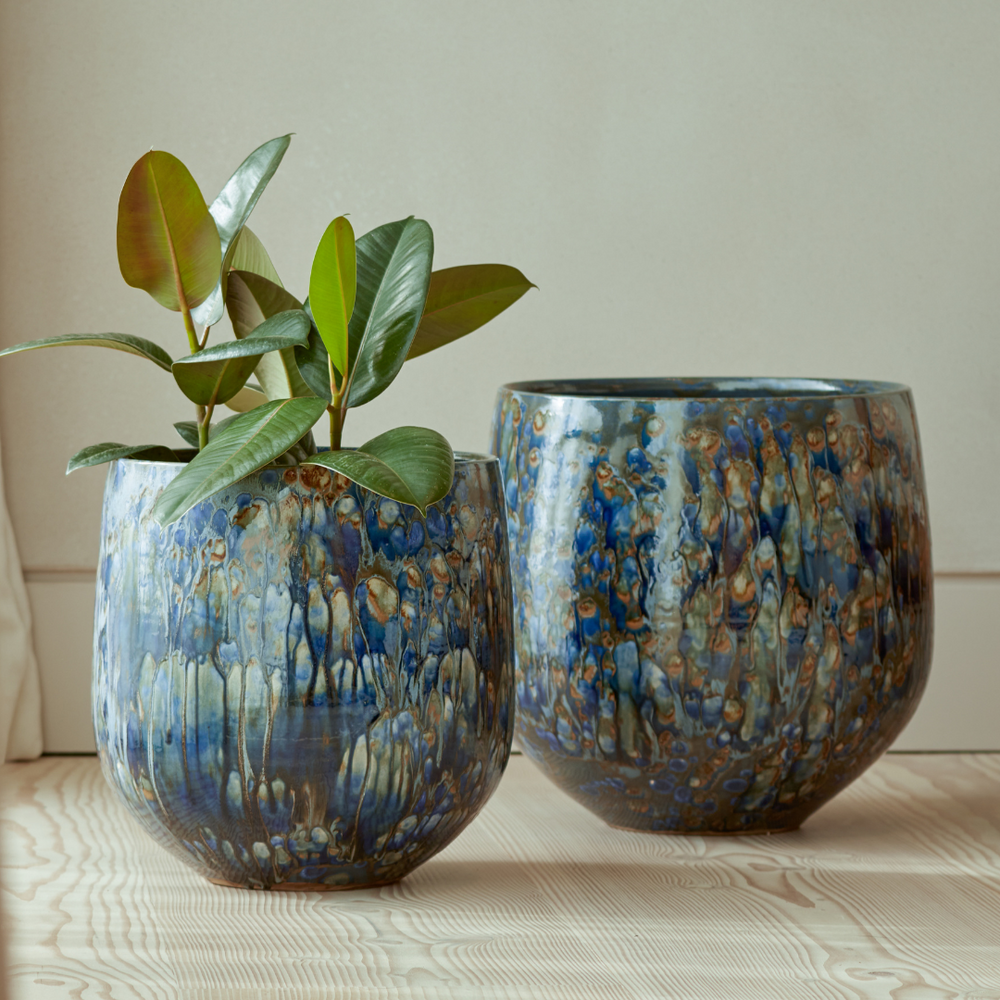
A well-chosen indoor pot does more than frame a favourite plant. Scale steadies tall stems while depth allows roots to settle and extend. Your indoor pot shape influences how a plant grows over time.
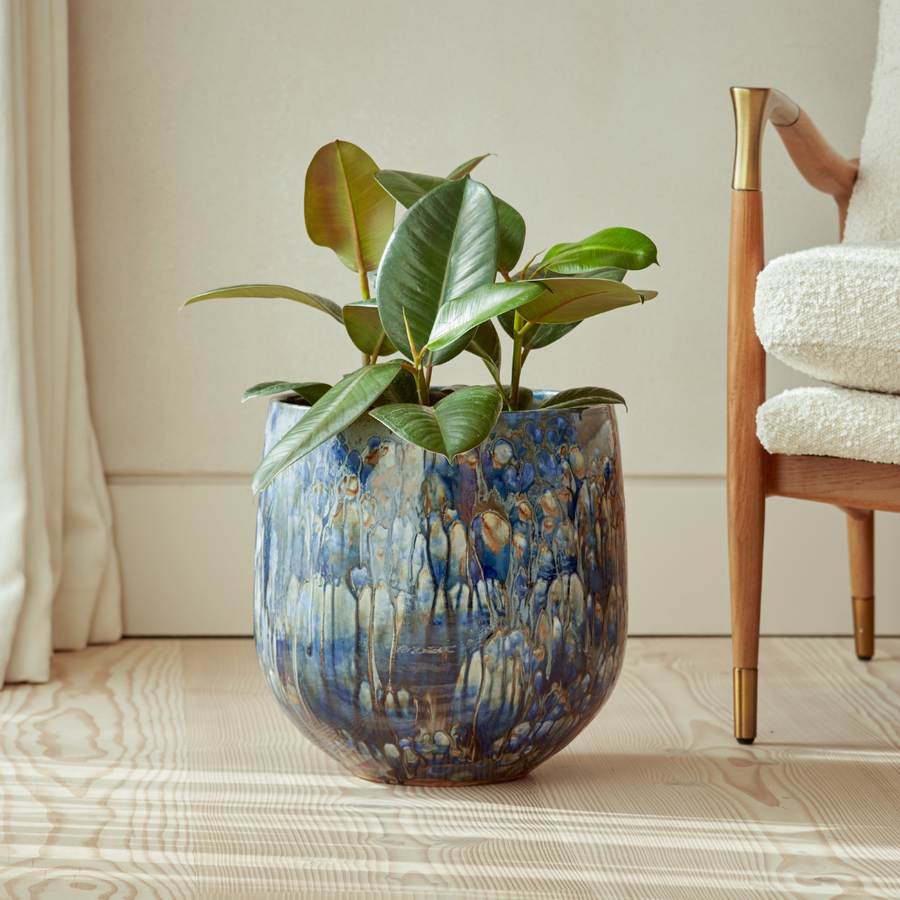
Our new indoor pot collection has been designed with exactly these quiet requirements in mind — watertight vessels intended for real interiors, from generous floor-standing pieces for established houseplants to lower bowls that suit spreading forms or layered planting.
When selecting containers, consider:
-
Root depth: deeper, egg-shaped silhouettes suit palms, rubber plants, fiddle-leaf figs and indoor olive trees, which send roots downward and benefit from tall containers
-
Width: broader profiles give surface-rooting plants such as calatheas or peace lilies room to stretch
-
Overall scale: large indoor pots for houseplants — including statement indoor trees — often need sizes of 50–70cm to feel balanced and allow long-term growth
-
Weight: a reassuring heft keeps taller plants secure on floors and in open-plan rooms
-
Finish: tactile, neutral glazes that sit easily indoors year-round
Classic rounded forms bring softness to corners and along sightlines, while lower bowls introduce a different rhythm — ideal for grouped arrangements, trailing plants or shallow-rooted varieties.
Soft stoneware tones, gentle glazes and warm terracotta hues allow foliage to take the lead visually, carrying interiors from winter’s quieter mood into brighter spring rooms. Much of our indoor pot collection features reactive glazes — finishes that shift and pool in the kiln, creating soft variations in tone and surface from piece to piece. No two are ever quite the same. Subtle mottling, gentle colour movement and natural depth give each pot the character of handmade ceramics.
These nuanced surfaces are particularly beautiful in winter light, when low sun skims across curves and reveals layers of glaze, and again in spring, when brighter days pick up their quiet sheen.
Letting spring arrive gently
Winter plant care isn’t about dramatic interventions. It’s about observation. Light shifts. Compost dries. Leaves respond.
By easing back on water, increasing light where possible, managing dry air and planning gentle repotting, you’re already answering the quiet question behind so many winter searches: what is wrong with my houseplant?
Most often, nothing at all — it simply needs a little room to breathe, stretch, and grow again. Ready to repot? RHS Chelsea Flower Show award-winning designer Gemma Haigh shares her considered approach to spring repotting — and the small details that make all the difference. Discover more on the blog.
Read More on our Blog